Case Study
Posted on
Understanding how and where stress concentrates within a structure is critical to preventing catastrophic failure, yet these stresses are hidden from view. For the defence sector, where safety, reliability and performance are non-negotiable, this challenge is magnified.
To advance Australia’s capability in this space, Lead Entrepreneur John Codrington from Adelaide University, has worked with RMIT University and industry partner 1MILLIKELVIN to push the boundaries of technology that makes internal structural stress visible.
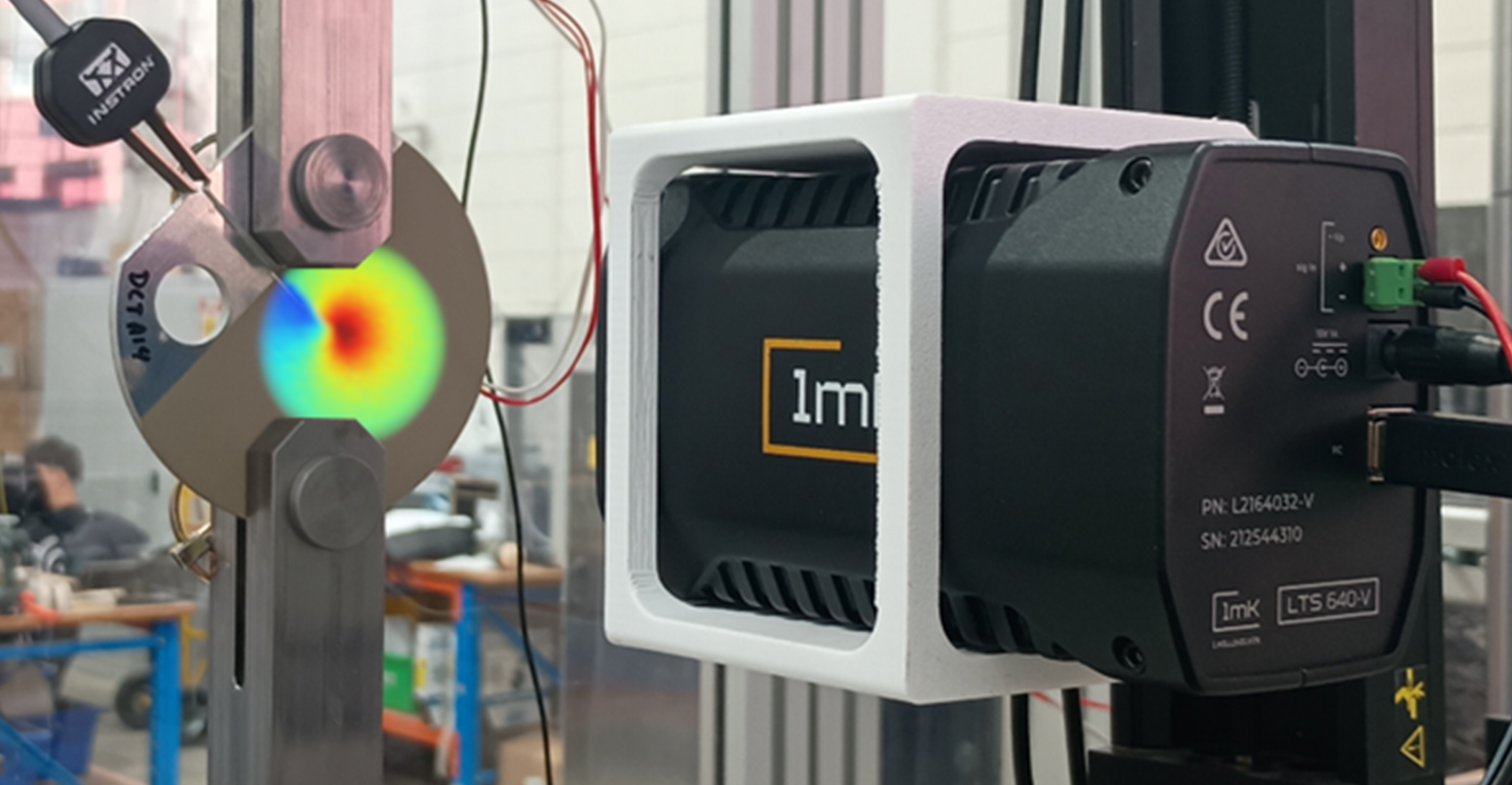
With support from an AEA Seed grant, the project has progressed a pioneering capability that enables 4D measurement and visualisation of stress profiles and their evolution across aerospace, maritime and land platforms. By fusing multicamera imaging, automated detection algorithms and time-based visualisation, the technology offers a step change in how engineers monitor fatigue, analyse structural condition and validate designs.
At the heart of the system is Thermoelastic Stress Analysis (TSA) - an optical, non-contact measurement technique that uses thermal imaging and advanced data processing to convert milli-scale temperature variations into a visual map of surface stress. This allows engineers to “see” stresses as they develop and evolve, enabling early detection of fatigue cracks and more accurate assessment of how long components can safely remain in service.
Through the AEA Seed project, the team undertook an extensive experimental program using test components representative of real‑world industry use to validate the underlying algorithms. These trials confirmed the accuracy and limitations of the approach, enabled optimisation of the software, and demonstrated the technology’s ability to deliver clear, high-quality stress visualisation and measurement.
This merged capability, combining the Adelaide University’s automated fatigue crack detection and prediction tools with RMIT’s 4D visualisation and image integration, has the potential to transform how structures are tested under real operating conditions. Discussing the technology's future use, Kheang Khauv, founder and Managing Director of 1MILLIKELVIN says, “It is equally valuable for applications ranging from 3D printed components to steel bridges to fifth generation fighter jets.”
With validation complete, the next phase will focus on scaling the technology into a fully distributable software package and preparing for end-user trials.
It’s another great example of the innovative industry-backed research that is being supported through Australia’s Economic Accelerator $1.6 billion program.
Follow the AEA LinkedIn page for updates.