Case Study
Posted on
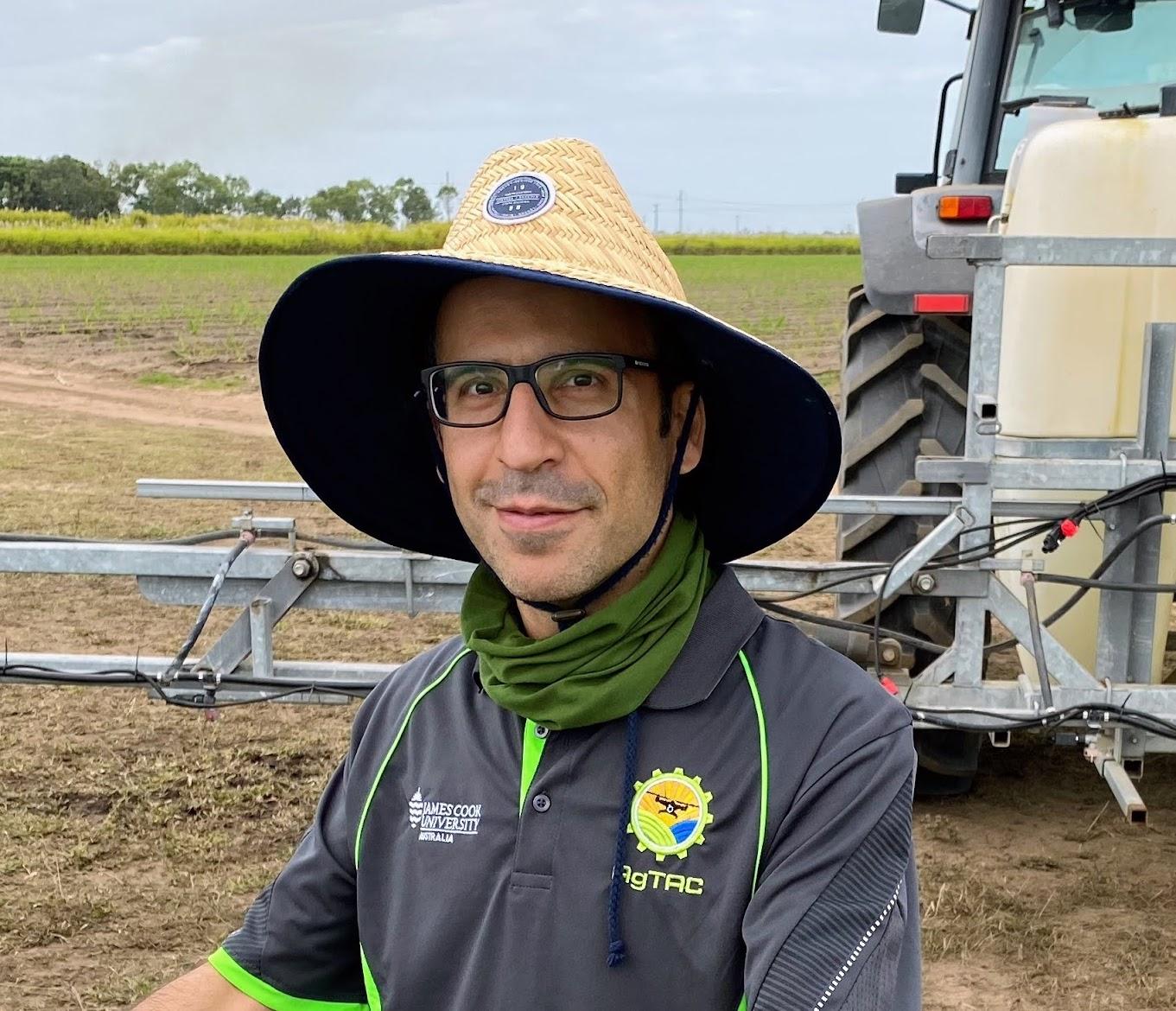
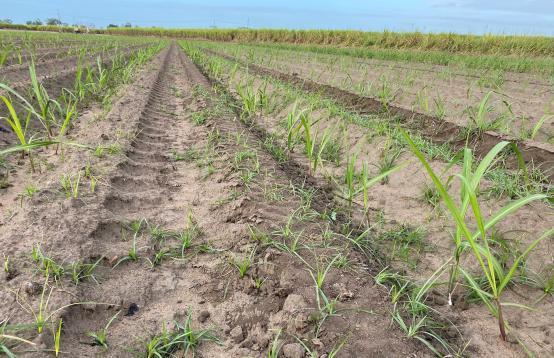
Ratoon Stunting Disease (RSD) is one of the sugar industry’s most persistent challenges- difficult to detect, costly to diagnose, and capable of silently reducing yields for years. To help growers tackle this hidden threat, Lead Entrepreneur Professor Mostafa Rahimi Azghadi and his team at James Cook University (JCU) have developed Sugar-AI, an innovative satellite-powered tool that brings advanced AI-based disease detection directly to the farm gate.
Supported through an AEA Seed grant, Sugar-AI builds on JCU’s earlier proof-of-concept to deliver a fully operational prototype that uses freely available satellite imagery and machine learning to assess crop health at scale. Working closely with Herbert Cane Productivity Services Ltd (HCPSL), Burdekin Productivity Services (BPS) and Sugar Research Australia (SRA), the team developed an easy-to-use map-based interface that allows growers and agronomists to draw paddock boundaries, view vegetation health indicators and generate AI-driven RSD risk maps in real time.
Extensive field sampling in North Queensland, paired with gold-standard laboratory testing, enabled the team to build and validate new machine learning models using multiyear RSD datasets. Notably, a newly developed weather-enhanced model, combining satellite and Bureau of Meteorology data, achieved up to 95% diagnostic accuracy, a major leap forward for non-invasive crop disease detection. These methods and results were further validated through publication in Computers and Electronics in Agriculture and Information Processing in Agriculture, two leading international agtech journal.
Sugar-AI has been enthusiastically received during demonstrations with growers and productivity services, and its showcase at the 2025 North Queensland Avocado and Horticulture Show and the 2025 Biosecurity Showcase in Cairns attracted strong interest from researchers, investors and agritech companies.
Now at Technology Readiness Level (TRL) 4, the next stage will involve broader field trials across Queensland to progress the technology to TRL 5 and expand its capabilities to detect other crop diseases and stress indicators. As Professor Azghadi notes, “the project demonstrates the power of university–industry collaboration in turning cutting-edge AI into practical tools that strengthen productivity, sustainability and biosecurity across regional Australia.”
AEA is a $1.6 billion Australian Government investment aimed at transforming Australia’s research translation and commercialisation landscape.