Case Study
Posted on
Thermal imaging is rapidly becoming central to modern technologies - from security systems and smart appliances to fire detection and driver assist platforms. Yet today’s devices rely on lenses made from costly, highly restricted materials such as germanium and high-grade silicon, limiting their accessibility and commercial scalability.
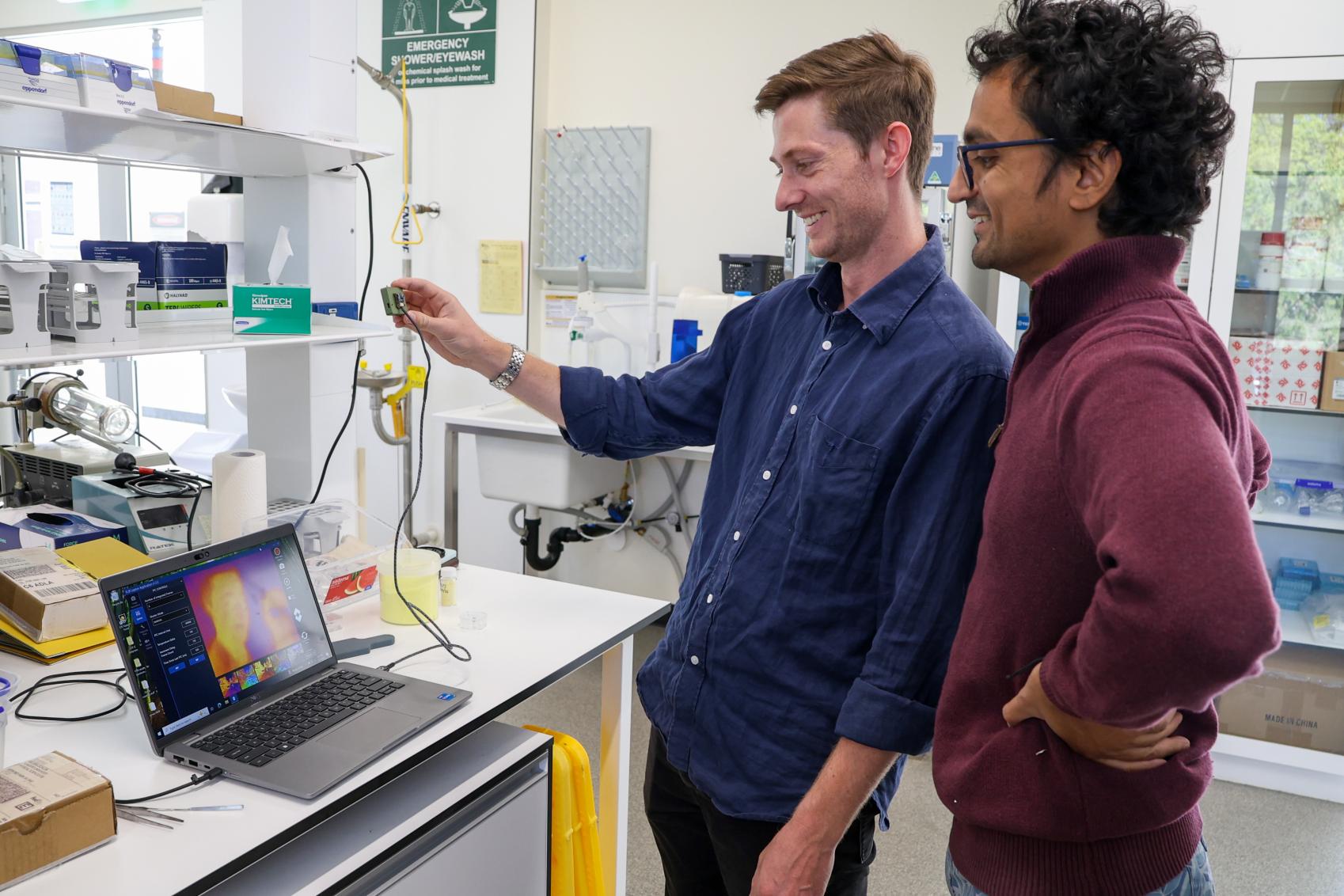
Led by Professor Justin Chalker, this AEA Seed project at Flinders University has delivered an innovative breakthrough: a novel polymer lens that can be used in thermal imaging cameras at a fraction of the cost of conventional materials. Made from readily available raw ingredients, the new lens offers an affordable, scalable alternative without compromising imaging quality.
The team successfully validated the polymer lens in a prototype camera, demonstrating clear, high quality thermal images and video. In parallel, the project advanced a quantum-enabled device designed to strengthen very weak signals without introducing background interference, enabling clearer and more reliable measurements across a range of sensing applications. This technical progress has supported concrete steps toward commercialisation, including the registration of new intellectual property developed during the project.
Industry engagement has been strong, with the team working alongside multiple end users, including NASA and leading optics companies, to facilitate testing and future adoption of the technology.
By reducing cost barriers and improving signal clarity, this project positions Australia at the forefront of next-generation sensing and imaging innovation, creating new opportunities across defence, space, manufacturing and emerging technology sectors.
By backing projects with strong commercial potential and industry relevance, AEA helps researchers accelerate the development of breakthrough technologies and bring high value Australian ideas to market sooner.
AEA is a $1.6 billion Australian Government investment aimed at transforming Australia’s research translation and commercialisation landscape.
Find out more about and follow the AEA LinkedIn page for updates.